Primary School

Transitioning to Primary School: Making the Leap Less Scary for Your Child

As global parents, you want your little one to feel excited, not anxious about the big step from kindergarten to primary school. The new step to primary school marks an exciting new chapter, full of learning, new friends, and growth.

Yet for many children and their parents, it can feel overwhelming. The good news? With the right preparation and support, transitioning to primary school can be smooth, joyful, and even empowering.

At Santosa Intercultural School, as an International School in Bali, we understand this leap wholeheartedly. Our Cambridge Curriculum and nurturing environment are particularly designed to make the transition to primary school feel safe, exciting, and full of possibilities.

Drawing from trusted guidance on successful transitions, this article shares practical, proven ways to make the move to primary school less scary and more thrilling for your child.

Why the Transition to Primary School Feels Big

Moving from kindergarten to primary school often brings new routines with bigger classrooms, independence, and new expectations.

Children may worry about making new friends, keeping up academically, or simply being away from familiar teachers. Please do understand that these feelings are completely normal. The key is to turn that natural nervousness into excitement and confidence.

Research from the Enabling Education Network (EENET) shows that children who are prepared and supported during the transition to primary school may settle faster, show better emotional well being, and achieve stronger early academic progress.

The right preparation reduces anxiety and builds a positive attitude toward learning that lasts for years.

Practical Steps Parents Can Take at Home

You play the most important role in making the transition to primary school positive. Here are simple, effective strategies you can start today:

  1. Talk Openly About the Change
    Use positive language: “You’re going to have so much fun learning new things!”. Read some stories about school life together and discuss feelings honestly.
  2. Visit the School Together
    Arrange a tour of the primary area. Let your child see the classroom, playground, and toilets. Familiarity will effectively reduce fear.
  3. Create a Consistent Routine Beforehand
    Start practicing the new school day rhythm (earlier bedtime, morning routine) a few weeks before the transition to primary school.
  4. Use Visual Supports
    Make a simple picture calendar showing the new school day. Children feel safer when they can “see” what’s coming.
  5. Maintain Emotional Connection
    Keep special goodbye rituals (a hug, a wave at the window) and celebrate small wins at the end of each day.

The EENET Transition Guide emphasises that strong communication at home and predictable routines are the two most powerful tools for a happy transition to primary school.

Building Confidence Before the Big Day

Help your child feel capable and excited:

  • Do roleplay of a typical primary school day at home.
  • Visit the new classroom together and point out fun areas (art corner, reading nook, playground).
  • Talk about all the wonderful things they will learn and the new friends they will make.

This gentle introduction makes the actual transition to primary school feel like a natural next step rather than a scary jump.

What to Expect in Primary School and How We Support You

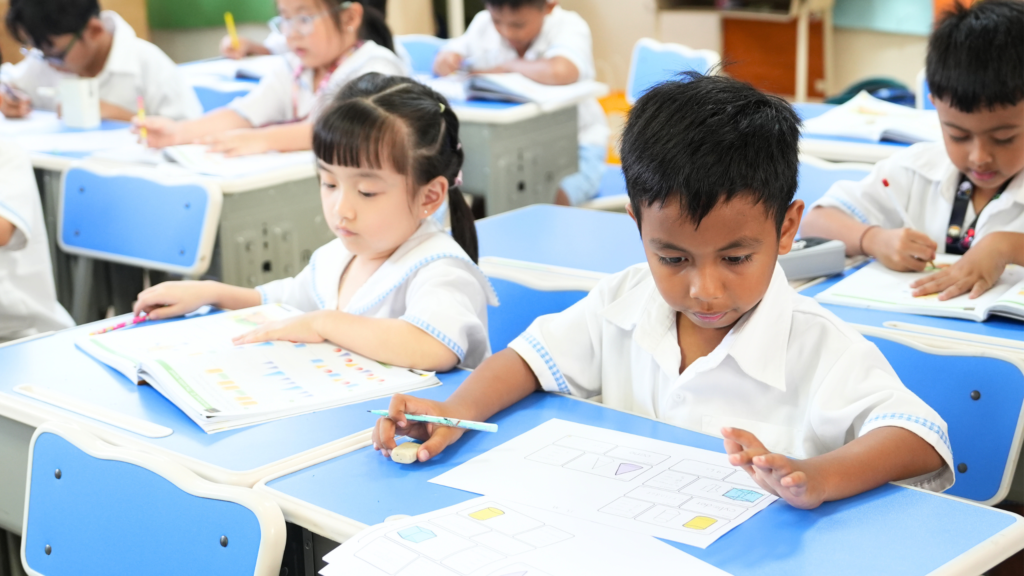
Primary school brings longer lessons, more independence, and exciting new subjects. At Santosa Intercultural School, we ease children to adapt into this new environment with smaller class sizes, caring teachers, and a curriculum that balances challenge with support. To make the students feel nurtured, we provide a teacher assistant for each class in the first grade.

We maintain close communication with parents through regular updates, parent teacher meetings, a dedicated counselor team, and an open door policy. If your child feels worried, our team is ready to help with extra emotional check ins and personalised support.
You’re Not Alone, We’re Here to Help

The transition to primary school is a big milestone, but it doesn’t have to be scary. With thoughtful preparation, loving support, and the right school environment, it becomes a joyful step forward.

As an International School in Bali, we are committed to making every child’s move to primary school become a smooth journey, full of positivity and excitement.

Our experienced team works closely with families to ensure the transition is successful and stress-free. Ready to give your child a confident, happy start in primary school?

We’d love to show you how we make the leap to primary school a wonderful adventure.Learn more about our programs at our International School in Bali.

Professional Source from:

https://www.eenet.org.uk/resources/docs/Final-Transition-Guide_English-3.pdf
Skills That Will Matter in 2035

Skills That Will Matter in 2035: Why Creativity, Empathy & Global Thinking Will Outshine Grades

As global parents, we all know that the world is rapidly moving and the world your children will inherit in 2035 or when they grow up will be very different from today.

Artificial intelligence will handle routine tasks, automation will reshape jobs, and success will belong to those who can think creatively, connect deeply with others, and adjust across cultures. Grades alone will no longer be enough.

The skills that will matter in 2035 are the deeply human ones, creativity, critical thinking, emotional intelligence, cross-cultural communication, and global collaboration.

These are the transformative competencies that will set your child apart and help them thrive in a complex, interconnected world.

At Santosa Intercultural School, as an International School in Bali, we don’t wait until 2035 to build these skills. Our Cambridge Curriculum, combined with our holistic approach, already develops them every single day.

Why Creativity Will Be the Top Skill in 2035

By 2035, creativity will be the most sought after skill because AI can replicate knowledge, but it cannot invent new ideas the way humans can.

The OECD’s Future of Education and Skills 2030 project calls creativity one of the three “transformative competencies” that students must master to create value in tomorrow’s world.

Creative thinkers solve problems that don’t yet exist. They turn challenges into opportunities to grow. In our classrooms at Santosa, children are encouraged to invent their own path, design the solutions, and express ideas through art, music, and project-based learning.

Giving your child some open ended questions instead of worksheets. “What would you build if you could change one thing in the world?” This simple habit sparks the creative confidence that will matter most in 2035.

Critical Thinking: The Superpower for Navigating Complexity

In 2035, information will be everywhere, but wisdom will be rare. Critical thinking, the ability to analyse, evaluate, and make decisions will be essential.

The OECD highlights critical thinking as a core future competency because it helps students reconcile tensions and make ethical choices in a rapidly changing world.

At Santosa Intercultural School, we teach it through debates, real world projects, and inquiry based learning rather than rote memorisation.

“Why do you think that?” or “What might happen if…?” instead of giving immediate answers. These small conversations build the sharp, independent minds that society will value in 2035.

Emotional Intelligence: The Skill That Makes Everything Else Possible

Empathy and emotional intelligence will outshine technical knowledge because technology cannot replace human connection. Leaders, innovators, and collaborators in 2035 will need high emotional intelligence to inspire teams, resolve conflicts, and work efficiently. 

The OECD Future of Education and Skills 2030 report stresses that students must develop the ability to take responsibility for their actions and understand others’ perspectives.

At Santosa, we weave emotional intelligence into daily life through reflection circles, peer mentoring, and character education. We also have our certified in house psychologic that they can consult for any area that they need support. Guiding their young minds with tons of questions and hesitations, our designated team will help them during these rough times of teenagers’ life.

Name emotions together (“I can see you feel frustrated”), listen actively, and celebrate kindness. These habits lay the foundation for the empathy that will make your child a trusted leader in 2035.

Cross Cultural Communication: Speaking the Language of the Future

Global collaboration will be the norm, not the exception. Children who can communicate effectively across cultures will have a massive advantage.

The OECD identifies reconciling tensions and understanding diverse viewpoints as key future skills. Learning alongside friends from many countries, exploring Indonesian traditions, and discussing global issues in our Cambridge program can broaden their point of view towards the modern world and open a lot more opportunities in their future.

At home, you can support this at home by watching international stories together, cooking meals from different cultures, or simply asking “How do you think people in another country might see this?” These small steps help them to build the cross-cultural communication skills.

Working Together Across Borders

The ability to collaborate with people from different backgrounds will be non-negotiable. The OECD Future of Education and Skills 2030 project calls this “creating new value through collective intelligence.”

At Santosa Intercultural School, we create group projects, international exchanges, and community service teach children how to listen, compromise, and co create skills that turn individual talent into powerful teamwork. It helps them to work better in a team, which can add the effectiveness and trust among peers, which is unable to be replaced with technology or Artificial Intelligence.

Encourage this by involving your child in team games, group problem solving at home, or virtual connections with relatives abroad.

The Future Belongs to the Human Heart and Mind

By 2035, creativity, empathy, and global thinking will outshine grades. The children who master these skills will lead, innovate, and connect in ways we can only imagine today. As an International School in Bali, we are already preparing your child for that future today.

To see how we implement these values in our daily curriculum, learn more about our programs at our International School in Bali.

Professional Source from:

https://www.oecd.org/en/about/projects/future-of-education-and-skills-2030.html

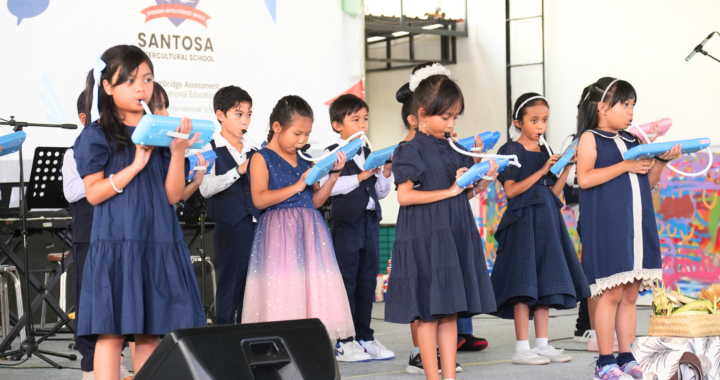
Music Activities for Children

Music Activities for Children: Tune Into Fun That Sparks Joy and Learning

We all know the power of sensory play, but have you discovered how music activities from an earlier age can transform everyday moments into real brain building magic that also add on bursts of joy, and creativity?

In a world full of screens and digital era, music activities for young children offer something beautifully simple: pure fun that actually grows their minds, emotions, and social skills.

At Doremi Preschool and Santosa Intercultural School, we see this magic every day, where children play the music, dance the rhythm, and sing their way to stimulate brains and happier hearts.

Drawing from trusted early childhood research, this guide will show you why music activities for young children are one of the most powerful tools you have as a parent.

Why Music Activities for Young Children Are So Powerful

Music is way above entertainment. It is like a nutritious food for the brain. When young children engage in music activities, multiple areas of the brain light up at once.

Rhythm, melody, movement, and language all work together, creating rich neural connections that support learning for years to come.

According to Bright Horizons, one of the world’s leading early education experts, music activities help children to develop:

  • Stronger language and literacy skills
  • Better coordination and motor development
  • Improved emotional regulation and self expression
  • Deeper social bonds and empathy
  • Enhanced memory and attention span

The best part? Children don’t even realize that they are “learning”, instead they are simply having fun. This mindfulness approach is exactly why music activities for young children are so effective.

Rhythm Meets Child Development: The Science Behind the Happiness

When children move to music, they’re not just having fun, they are wiring their brains for success. Research shows that regular music activities for young children strengthen the corpus callosum (the bridge between the two sides of the brain), improving coordination, creativity, and emotional processing.

Music also helps children regulate emotions. A slow lullaby can calm an upset toddler, while an upbeat song can lift a grumpy mood. These emotional benefits are especially valuable for global families navigating different cultures and environments.

Make Musicality Activities for Young Children as a Daily Habit

The secret to success is keeping it light and consistent. Even 10 to 15 minutes a day makes a big difference. Here are three easy ways to build the habit:

  1. Morning Music Greeting: Start the day with a silly hello song.
  2. Transition Tunes: Use a special song when it’s time to clean up or eat.
  3. Bedtime Wind-Down: End the day with gentle lullabies or soft humming.

Remember: Your enthusiasm is contagious. When you sing and dance with joy, your child naturally joins in.

Start Today: Your Child’s Musical Journey Begins Now

Music activities for young children are one of the simplest, most joyful ways to support their development and create beautiful memories that last a lifetime.

If you’re in Bali and looking for a school that truly celebrates music and creativity, we’d love to welcome you to Doremi Preschool and Santosa Intercultural School. Our IEYC and Cambridge Curriculum weaves music and movement into daily learning in the most joyful way.

Here’s to happy singing, dancing, and growing together!

Professional Source from:

https://www.brighthorizons.com/article/education/music-and-children-rhythm-meets-child-development