Financial Responsibility

Youth Saving Habits: How to Teach Your Children Financial Responsibility

As global parents, you want your child to grow up confident, capable, and prepared for real life. While academic success is important, one crucial life skill often gets overlooked: financial responsibility.

Teaching children how to manage money wisely is one of the greatest gifts you can give them and it starts much earlier than what most parents foundational concepts earls realize.

Teaching younger kids about money might seem premature, but it is the groundwork for future financial literacy as financial responsibility is no longer optional.

It’s a vital skill that builds confidence, independence, and long term success. At Doremi Preschool and Santosa Intercultural School, an International School in Bali, we believe character education includes preparing children for real world point of view, including introducing age appropriate financial responsibility.

Why Financial Responsibility Matters for Children

Financial responsibility is about more than knowing how to count coins. It teaches children to make smart money choices, decision making, problem solving, and respect for effort and resources.

Kids who learn these skills early tend to become more confident, less impulsive, and better prepared for adulthood.

According to a leading expert and strategist on personal finance, Kerry Hannon to Forbes, children who understand money concepts from a young age develop stronger self discipline and a healthier relationship with spending and saving.

They are less likely to fall into debt traps later and more likely to make thoughtful financial choices throughout life.

In our increasingly digital and consumer driven world, teaching financial responsibility early gives your child a powerful advantage.

Financial Responsibility

Start Early: Age Appropriate Ways to Teach Financial Responsibility

The best time to begin is now, no matter your child’s age. Here’s how to introduce financial responsibility step by step:

For Ages 3–6 (Early Years)

You may use simple tools like clear jars labeled “Save,” “Spend,” and “Give.” When they receive money (from tooth fairy, gifts, or small chores), help them divide it. This visual method makes the concept of money tangible and fun. Talk about what each jar represents in simple terms.

For Ages 7–10 (Primary Years)

Introduce a small weekly allowance tied to responsibilities. Let them make real choices with their money. If they spend it all on candy and later regret not having money for a toy, gently guide them through the lesson instead of rescuing them. With guidance and discussions, these natural consequences are powerful teachers.

For Ages 11+ (Upper Primary & Beyond)

Move to more advanced concepts like budgeting, comparing prices, and differentiate their needs and wants. Involve them in family discussions about bills or vacation planning. Older children can even start simple saving goals, like contributing toward a special item they want.

Practical Strategies Parents Can Use at Home

Here are proven methods recommended by financial experts to build strong money habits:

  • Give Context, Not Just Cash
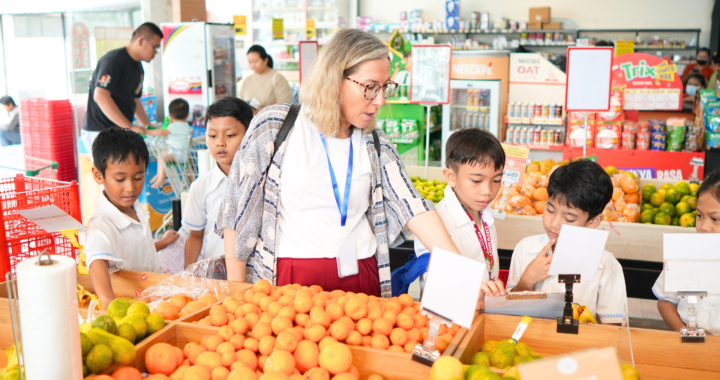
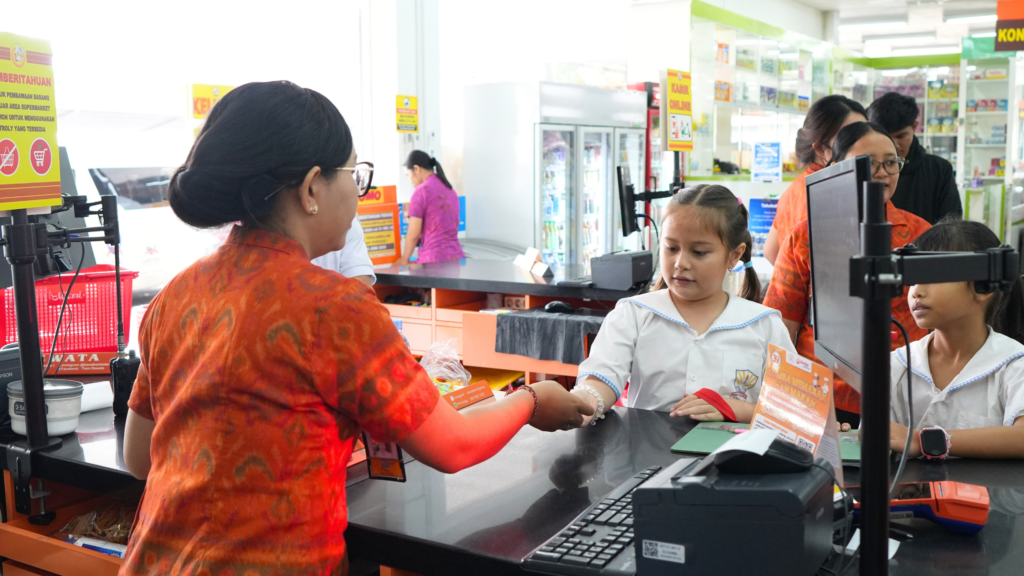
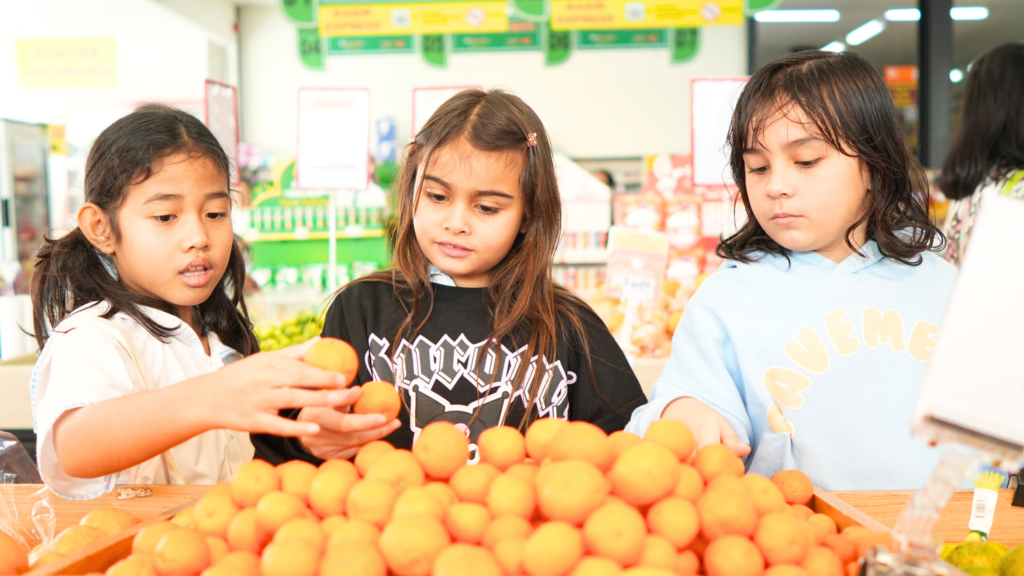
    Make a simple roleplay to make them understand where money comes from through helping with chores or daily tasks and reward them cash in return. Or simply turn grocery shopping into a learning experience by comparing prices and making choices together.
  • Use the 50/30/20 Rule Simplified
    Teach children to divide their money: 50% for needs/saving, 30% for wants, and 20% for giving or long-term goals. Adjust according to age.
  • Open a Real Savings Account
    Once they’re old enough, take them to the bank to open their own account. Seeing their money grow teaches the power of patience and compound interest.
  • Role Play Real Life Scenarios
    Play “shop” at home or create a pretend budget for a weekend trip. Make it fun and interactive as it will also strengthen the bond between parents and kids.
  • Talk Openly About Money
    Regular, calm conversations about family finances help demystify money and reduce anxiety around it. Keep in mind that you should not oversharing if there’s any financial problem in the family.

At Doremi Preschool and Santosa Intercultural School, we support these values through our character education program as well as our regular unit plan.

Students learn responsibility not only in academics but also through real life projects that build decision making and planning skills.

Common Mistakes Parents Should Avoid

While teaching financial responsibility, watch out for these common pitfalls:

  • Giving money without any responsibilities attached
  • Be the “back up plan” for your child every time they make a poor money choice
  • Never talking about money because it feels uncomfortable
  • Focusing only on saving while ignoring the joy of generous giving

The goal is balance, teaching children that money is a tool, not the ultimate goal.

How Santosa Intercultural School Builds Financial Responsibility

While we don’t run a formal finance class in early years, our holistic IEYC and Cambridge Curriculum naturally develops responsibility through project based learning, goal setting, and reflection. Our kindergarteners learns the value of money through roleplays to make them have a better idea without overthinks their young minds.

As we wants them to be an independent individuals, we encourage our students to plan, develop their own resource management, the value of contribution, and foundational skills for financial responsibility.

It would be a great support from parents to partner with us so that values taught at school are reinforced at home, creating consistency for our child’s development.

Believing that the lessons that they got in the school are things that they can actually practice it in the daily life is one of our goal to brings them to become a global responsible citizens of the world.

Financial Responsibility

Start Small, Think Long Term

Teaching financial responsibility doesn’t require perfection. Start with small, what really matters is consistent habits.

Celebrate the progress, no matter how small. Be patient when mistakes happen as they are part of the learning process.

The children who grow up understanding money will have greater freedom, confidence, and peace of mind as adults.

By teaching them early, you’re giving them one of life’s most important skills. If you’re looking for a school that supports the development of responsibility and not overly concerning in academic progress, we invite you to our International School in Bali environment and balanced curriculum help children develop not just academically.

Professional Source from:

https://www.forbes.com/sites/kerryhannon/2018/10/21/how-to-teach-your-kids-about-money

Extracurricular Activities

Extracurricular Activities Balance: How Many is Too Many?

Discovering what your kids’ passions and talents while doing a busy fast moving life can sometimes be exhausting for parents.

We truly understand the struggles, and that’s why in both Doremi Preschool and Santosa Intercultural School we provides additional extracurricular activities, from music lessons and sports to art classes and language clubs.

To answer the important question every parent eventually asks: How many extracurricular activities are too many?

The truth is, more is not always better. While extracurricular activities offer wonderful benefits, too many can lead to stress, exhaustion, and even burnout in children.

Finding the right balance is one of the most valuable things you can do for your child’s wellbeing and long term growth.

At Doremi Preschool and Santosa Intercultural School, a International School in Bali, we believe in a holistic approach.

As a certified IEYC and Cambridge curriculum school, we enhance rich learning experiences to help our parents to understand how to choose extracurricular activities wisely, ensuring children still have time to play, rest, and simply be kids.

Extracurricular Activities

The Real Benefits of Extracurricular Activities

When chosen thoughtfully, extracurricular activities bring tremendous value. They help children to:

  • Discover new passions and talents
  • Develop social skills and teamwork
  • Build discipline, time management, and resilience
  • Boost confidence and self-esteem

Recent research shows that well-balanced extracurricular activities can improve academic performance, reduces mood swing, and overall happiness. However, balance is the keyword for this positive impacts.

The Hidden Cost of Over Scheduling

It’s pretty common that in these modern yet rapid life phase era, parents fill their child’s week with multiple activities after school to keep their child occupied or simply another options to reduce screen time, which as we all know, not a good habit for kids.

While the intention is good, too many extracurricular activities can have the opposite effect. Children may become tired, irritable, anxious, or even lose interest in the very things they once loved.

According to pediatric experts at Portland Pediatric Associates, there are some side effects from over-scheduled kids, such as:

  • Increased stress and anxiety
  • Less time for free play and creativity
  • Reduced family connection
  • Sleep problems and exhaustion

The result? Instead of raising happy, well-rounded children, we risk their happiness and make them prone to stress and burnt out.

The article “Extracurricular Activities & Daily Balance: How Many Is Too Many?” from Portland Pediatric Associates clearly explains that quality matters far more than quantity.

So, How Many Extracurricular Activities Is Too Many?

There is no magic number that fits every child. The right balance depends on your child’s age, personality, energy level, and interests. However, most child development experts recommend the following guidelines:

  • Ages 3-6 (Preschool/Early Primary): 1-2 activities per week maximum
  • Ages 7-10: 2-3 activities per week is usually ideal
  • Ages 11 and above: 3 activities maximum, with at least 2-3 completely free afternoons

The most important rule? Leave enough free time for play, rest, and family connection. Children need time to daydream, exploring their own games, and simply relax.

Signs Your Child Has Too Many Extracurricular Activities

Watch for these warning signs that your child may be over scheduled:

  • Frequent complaints of tiredness or boredom with activities
  • Resistance or meltdowns before activities
  • Declining school performance or attention
  • Less time for family meals or relaxed play
  • Physical symptoms like headaches or stomach aches from stress

If you notice any of these, it may be time to review and reduce the number of extracurricular activities.

Extracurricular Activities

Find the Right Balance for Your Child

Here are some practical tips to strike a healthy balance:

  1. Prioritise Quality Over Quantity
    One activity your child truly loves is far better than four they only tolerate.
  2. Protect Free Play Time
    Free, unstructured play is essential for creativity, problem solving, and emotional health. Make sure your child has several afternoons a week with nothing scheduled.
  3. Involve Your Child in the Decision
    Ask them which activities they enjoy most and are willing to commit to.
  4. Consider the Whole Family Schedule
    Too many activities can exhaust the entire family. Choose activities that fit your lifestyle and values.
  5. Re-evaluate Regularly
    Children’s interests and energy levels change. Review the schedule every few months and be willing to drop or pause activities.

At Santosa Intercultural School, we support this balanced approach. While we offer excellent extracurricular options such as arts, music and sports, we also intentionally protect time for rest and free play. Our goal is to develop well rounded children who are enthusiastic about learning, not exhausted by it.

Final Thought: Less Can Be More

Raising happy, confident children isn’t about packing their schedule as full as possible. It’s about giving them the right experiences in the right amount, with plenty of space to breathe, play, and simply be.

The benefits of extracurricular activities are real, but only when balanced with rest and free time. Your child doesn’t need to do everything. They need the freedom to enjoy what they do.

If you’re looking for a school that truly understands the importance of balance, we invite you to discover Santosa Intercultural School. Our caring community and well designed curriculum support both academic excellence and a healthy, joyful childhood.

Professional Source from:

Boredom Advantage

The Boredom Advantage: Why Unstructured Play is Your Child’s Best Teacher

With huge curiosity and the critical mind of today’s youngsters, you’ve probably felt the pressure: keep your child busy, entertained, yet constantly learning. But what if the secret to raising creative, resilient, and happy kids lies in doing the opposite?

The boredom advantage is real and it could be one of the most powerful gifts you give your child.

Kids’ lives today are filled with screens, structured activities, and scheduled playdates, and that makes unstructured play and a little healthy boredom might be exactly what young minds need to explore.

Children who are given space to get bored often become the most imaginative, independent, and thoughtful learners.

Read further to see the explanations of the scientific reasons behind the boredom advantage, why unstructured play is your child’s best teacher, and how you can gently bring more of it into your family life.

The clear message? Sometimes the best thing you can do for your child is giving nothing at all.

Why Boredom Is Actually Good for Children

Most parents worry when their child says “I’m bored.” But according to research from the Greater Good Science Center at UC Berkeley, boredom is not the enemy. Inspite, it’s a powerful catalyst for creativity and self discovery.

When children have unstructured spare time, their brains shift from consuming information to creating it. Without constant entertainment, they begin to invent games, tell stories, solve problems, and explore their own interests.

This process strengthens imagination, emotional regulation, and independent thinking, skills that structured activities often cannot teach as effectively.

The boredom advantage helps children develop internal motivation. Instead of waiting for an adult to guide them, they learn to enjoy the spare time themselves. This is a foundational life skill that supports long-term happiness and success.

The Hidden Power of Unstructured Play

Unstructured play, the kind where children make up the rules, adjust the game, and decide what happens next, is one of the most valuable forms of learning. It builds:

  • Creativity and problem solving skills
  • Social and emotional skills (negotiating, sharing, resolving conflicts)
  • Physical coordination and confidence
  • Resilience (figuring things out when plans don’t work)

In Bali’s natural environment, unstructured play feels even more magical. Children climb trees, build their own kingdom with sandcastles and shellfishes, or invent stories using leaves and stones.

As an International School in Bali, we intentionally protect time for unstructured play in our IEYC and Cambridge programmes. We know that when children are free to explore, they learn more deeply and thoroughly.

What Happens When We Shield Kids from Boredom

The Greater Good Science Center warns that constantly rescuing children from boredom can actually limit their development.

When every moment is filled with activities or screens, children miss the chance to practise patience, creativity, and self entertainment. Over time, this can lead to reduced attention span, lower frustration tolerance, and inability to generate their own ideas.

In contrast, children who experience the boredom advantage learn to trust their own minds and become more resourceful. This way, you will also have the perks of having more “me time” as they will be busier with their imagination. 

Simple Ways to Give Your Child the Boredom Advantage at Home

You don’t need to clear your entire schedule. Small, consistent changes can make a big difference:

  • Create “Boredom Boxes”
    Fill a box with open ended or recycled materials (cardboard, glue, markers, beads, fabric). When your child says they’re bored, point to the box instead of suggesting an activity.
  • Protect Unstructured Time
    Schedule at least 30-60 minutes of free play every day with no adult direction. Let them lead completely.
  • Resist the Urge to Rescue
    When boredom appears, give them some inspiration on what to create, or challenge them to build up something that they’re interested in. 
  • Go Outside
    Nature is the ultimate boredom-buster that sparks creativity. In the tropical heaven like Bali, even a short garden or beach exploration can lead to hours of imaginative play.

These simple freedom help children become more confident, curious, and self-directed learners.

The Long Term Gift of the Boredom Advantage

Children who regularly experience unstructured play and healthy boredom tend to become more creative, emotionally intelligent, and self motivated adults.

They are better at solving problems, handling uncertainty, and finding joy in everyday life. By giving your child the boredom advantage now, you’re preparing them not just for school, but for a fulfilling and successful future.

Start Small Today

You don’t need to make dramatic changes. Simply protect a little more unstructured time each day and resist the urge to fill every moment so they may have the boredom advantage without even knowing one.

Your child’s imagination will do the rest. And if you are looking for a school that truly values the power of play and the boredom advantage, we invite you to discover Doremi Preschool and Santosa Intercultural School, an International School in Bali.

Our holistic approach nurtures both structured learning and free exploration, helping every child grow as a group and flourish as an individual.

Professional Source from:

https://greatergood.berkeley.edu/article/item/what_happens_when_we_shield_kids_from_boredom

Growth Mindset for Kids

Growth Mindset for Kids: Turning Missteps Into Superpowers

As modern parents, you want your child to be confident, resilient, and ready for whatever life throws at them. But what if the secret to that confidence isn’t perfect grades or being the “smartest” kid in class?

What if it’s learning to see missteps not as failures, but as stepping stones to success? That’s the power of a growth mindset for kids and it’s one of the most valuable gifts you can give to your child.

As an International School in Bali, we don’t just teach subjects. We teach children that their abilities can grow through effort, practice, and learning from mistakes.

This way, we create a mindset that turns challenges into exciting opportunities and helps every child flourish as an individual while growing together as a group.

In this guide, you’ll discover what a growth mindset really means, why it matters more than ever, and simple, practical ways to nurture it at home.

The clear message? When kids learn that mistakes are part of learning, they gain the superpower to keep trying, keep improving, and keep believing in themselves.

What Is a Growth Mindset for Kids?

A growth mindset is the belief that abilities and intelligence are not fixed, they can be developed through dedication, effort, and learning from setbacks.

In contrast, a fixed mindset believes that talent is something you’re born with and it is something that you cannot really change. Children with a growth mindset see mistakes as valuable feedback and bounce back higher. They say “I can’t do it, yet” instead of “I can’t do it.”

Harvard Graduate School of Education research shows that this simple shift in their mindset can dramatically change how children face challenges in life, persist through difficulties, and encourage them to achieve more in life.

Why Growth Mindset for Kids Matters More Than Ever

Just like how babies fall down when they learn to walk before they can run, the children who succeed are not necessarily the ones who never make mistakes. Instead, they are the ones who know how to learn from their shortcomings.

A growth mindset for kids builds:

  • Resilience, they bounce back faster after disappointments
  • Motivation, they stay eager to try new things
  • Confidence, they believe they can improve with effort
  • Creativity, they take risks and explore ideas freely

When children understand that mistakes are very normal and that they can learn something from it, they will become braver learners. They raise their hands more, try harder tasks, and develop the emotional strength needed for a global future.

How to Nurture a Growth Mindset for Kids at Home

You don’t need to be a teacher to build this mindset. Here are simple, everyday strategies you can start using today:

1. Praise Effort, Not Just Results

Instead of saying “You’re so smart!”, try “I’m so proud of how hard you worked on that!”. This teaches children that effort is what leads to improvement.

2. Use the Power of “Yet”

When your child says “I can’t do it,” gently add “yet.”

“I can’t ride my bike yet.”

“I don’t understand this math problem yet.”

This tiny word opens the door to possibility and hope.

3. Share Your Own Mistakes

Tell stories about times you struggled and how you learned from them. Children need to see that even adults make mistakes and that’s okay.

4. Turn Mistakes into Learning Moments

After a setback, ask calm questions:

“What did you learn from this?”

“What could you try differently next time?”

At our school, we use these typical approaches every day. Our Cambridge Curriculum encourages students to reflect on their learning, appreciating every small progress, and view challenges as opportunities to grow.

The Long Term Benefits for Your Child

Children who develop a growth mindset tend to:

  • Achieve higher academic results over time
  • Show greater persistence when things get tough
  • Experience less anxiety about tests and performance
  • Develop stronger problem solving skills
  • Build healthier relationships through better emotional understanding

These benefits last far beyond school times. Having a growth mindset will prepare your child for a world where adaptability, creativity, and resilience will matter more than any single test score.

Simple Ways to Start Today

You can begin building a growth mindset for kids with small daily habits:

  • Keep a “Yet Journal” where your child writes one thing they improved that day
  • Play “Mistake Games” where everyone shares something they got wrong and what they learned
  • Replace “I’m not good at this” with “I’m not good at this yet”

These small steps create a powerful ripple effect in your child’s confidence and attitude toward learning. In Doremi Preschool and Santosa Intercultural School, we expect our pupils to always have a growth mindset so that they may upgrade themselves in every situation they face.

Ready to Give Your Child This Superpower?

A growth mindset for kids is one of the greatest advantages you can offer in today’s world. It turns hurdles into stepping stones and challenges into exciting adventures.

Contact our team at International School in Bali to discover how we help children turn every “I can’t” into “I can… yet.”

Professional Source from:

https://www.gse.harvard.edu/ideas/usable-knowledge/20/01/power-yet-growth-mindset

Primary School

Transitioning to Primary School: Making the Leap Less Scary for Your Child

As global parents, you want your little one to feel excited, not anxious about the big step from kindergarten to primary school. The new step to primary school marks an exciting new chapter, full of learning, new friends, and growth.

Yet for many children and their parents, it can feel overwhelming. The good news? With the right preparation and support, transitioning to primary school can be smooth, joyful, and even empowering.

At Santosa Intercultural School, as an International School in Bali, we understand this leap wholeheartedly. Our Cambridge Curriculum and nurturing environment are particularly designed to make the transition to primary school feel safe, exciting, and full of possibilities.

Drawing from trusted guidance on successful transitions, this article shares practical, proven ways to make the move to primary school less scary and more thrilling for your child.

Why the Transition to Primary School Feels Big

Moving from kindergarten to primary school often brings new routines with bigger classrooms, independence, and new expectations.

Children may worry about making new friends, keeping up academically, or simply being away from familiar teachers. Please do understand that these feelings are completely normal. The key is to turn that natural nervousness into excitement and confidence.

Research from the Enabling Education Network (EENET) shows that children who are prepared and supported during the transition to primary school may settle faster, show better emotional well being, and achieve stronger early academic progress.

The right preparation reduces anxiety and builds a positive attitude toward learning that lasts for years.

Practical Steps Parents Can Take at Home

You play the most important role in making the transition to primary school positive. Here are simple, effective strategies you can start today:

  1. Talk Openly About the Change
    Use positive language: “You’re going to have so much fun learning new things!”. Read some stories about school life together and discuss feelings honestly.
  2. Visit the School Together
    Arrange a tour of the primary area. Let your child see the classroom, playground, and toilets. Familiarity will effectively reduce fear.
  3. Create a Consistent Routine Beforehand
    Start practicing the new school day rhythm (earlier bedtime, morning routine) a few weeks before the transition to primary school.
  4. Use Visual Supports
    Make a simple picture calendar showing the new school day. Children feel safer when they can “see” what’s coming.
  5. Maintain Emotional Connection
    Keep special goodbye rituals (a hug, a wave at the window) and celebrate small wins at the end of each day.

The EENET Transition Guide emphasises that strong communication at home and predictable routines are the two most powerful tools for a happy transition to primary school.

Building Confidence Before the Big Day

Help your child feel capable and excited:

  • Do roleplay of a typical primary school day at home.
  • Visit the new classroom together and point out fun areas (art corner, reading nook, playground).
  • Talk about all the wonderful things they will learn and the new friends they will make.

This gentle introduction makes the actual transition to primary school feel like a natural next step rather than a scary jump.

What to Expect in Primary School and How We Support You

Primary school brings longer lessons, more independence, and exciting new subjects. At Santosa Intercultural School, we ease children to adapt into this new environment with smaller class sizes, caring teachers, and a curriculum that balances challenge with support. To make the students feel nurtured, we provide a teacher assistant for each class in the first grade.

We maintain close communication with parents through regular updates, parent teacher meetings, a dedicated counselor team, and an open door policy. If your child feels worried, our team is ready to help with extra emotional check ins and personalised support.

You’re Not Alone, We’re Here to Help

The transition to primary school is a big milestone, but it doesn’t have to be scary. With thoughtful preparation, loving support, and the right school environment, it becomes a joyful step forward.

As an International School in Bali, we are committed to making every child’s move to primary school become a smooth journey, full of positivity and excitement.

Our experienced team works closely with families to ensure the transition is successful and stress-free. Ready to give your child a confident, happy start in primary school?

We’d love to show you how we make the leap to primary school a wonderful adventure.Learn more about our programs at our International School in Bali.

Professional Source from:

https://www.eenet.org.uk/resources/docs/Final-Transition-Guide_English-3.pdf

Skills That Will Matter in 2035

Skills That Will Matter in 2035: Why Creativity, Empathy & Global Thinking Will Outshine Grades

As global parents, we all know that the world is rapidly moving and the world your children will inherit in 2035 or when they grow up will be very different from today.

Artificial intelligence will handle routine tasks, automation will reshape jobs, and success will belong to those who can think creatively, connect deeply with others, and adjust across cultures. Grades alone will no longer be enough.

The skills that will matter in 2035 are the deeply human ones, creativity, critical thinking, emotional intelligence, cross-cultural communication, and global collaboration.

These are the transformative competencies that will set your child apart and help them thrive in a complex, interconnected world.

At Santosa Intercultural School, as an International School in Bali, we don’t wait until 2035 to build these skills. Our Cambridge Curriculum, combined with our holistic approach, already develops them every single day.

Why Creativity Will Be the Top Skill in 2035

By 2035, creativity will be the most sought after skill because AI can replicate knowledge, but it cannot invent new ideas the way humans can.

The OECD’s Future of Education and Skills 2030 project calls creativity one of the three “transformative competencies” that students must master to create value in tomorrow’s world.

Creative thinkers solve problems that don’t yet exist. They turn challenges into opportunities to grow. In our classrooms at Santosa, children are encouraged to invent their own path, design the solutions, and express ideas through art, music, and project-based learning.

Giving your child some open ended questions instead of worksheets. “What would you build if you could change one thing in the world?” This simple habit sparks the creative confidence that will matter most in 2035.

Critical Thinking: The Superpower for Navigating Complexity

In 2035, information will be everywhere, but wisdom will be rare. Critical thinking, the ability to analyse, evaluate, and make decisions will be essential.

The OECD highlights critical thinking as a core future competency because it helps students reconcile tensions and make ethical choices in a rapidly changing world.

At Santosa Intercultural School, we teach it through debates, real world projects, and inquiry based learning rather than rote memorisation.

“Why do you think that?” or “What might happen if…?” instead of giving immediate answers. These small conversations build the sharp, independent minds that society will value in 2035.

Emotional Intelligence: The Skill That Makes Everything Else Possible

Empathy and emotional intelligence will outshine technical knowledge because technology cannot replace human connection. Leaders, innovators, and collaborators in 2035 will need high emotional intelligence to inspire teams, resolve conflicts, and work efficiently. 

The OECD Future of Education and Skills 2030 report stresses that students must develop the ability to take responsibility for their actions and understand others’ perspectives.

At Santosa, we weave emotional intelligence into daily life through reflection circles, peer mentoring, and character education. We also have our certified in house psychologic that they can consult for any area that they need support. Guiding their young minds with tons of questions and hesitations, our designated team will help them during these rough times of teenagers’ life.

Name emotions together (“I can see you feel frustrated”), listen actively, and celebrate kindness. These habits lay the foundation for the empathy that will make your child a trusted leader in 2035.

Cross Cultural Communication: Speaking the Language of the Future

Global collaboration will be the norm, not the exception. Children who can communicate effectively across cultures will have a massive advantage.

The OECD identifies reconciling tensions and understanding diverse viewpoints as key future skills. Learning alongside friends from many countries, exploring Indonesian traditions, and discussing global issues in our Cambridge program can broaden their point of view towards the modern world and open a lot more opportunities in their future.

At home, you can support this at home by watching international stories together, cooking meals from different cultures, or simply asking “How do you think people in another country might see this?” These small steps help them to build the cross-cultural communication skills.

Working Together Across Borders

The ability to collaborate with people from different backgrounds will be non-negotiable. The OECD Future of Education and Skills 2030 project calls this “creating new value through collective intelligence.”

At Santosa Intercultural School, we create group projects, international exchanges, and community service teach children how to listen, compromise, and co create skills that turn individual talent into powerful teamwork. It helps them to work better in a team, which can add the effectiveness and trust among peers, which is unable to be replaced with technology or Artificial Intelligence.

Encourage this by involving your child in team games, group problem solving at home, or virtual connections with relatives abroad.

The Future Belongs to the Human Heart and Mind

By 2035, creativity, empathy, and global thinking will outshine grades. The children who master these skills will lead, innovate, and connect in ways we can only imagine today. As an International School in Bali, we are already preparing your child for that future today.

To see how we implement these values in our daily curriculum, learn more about our programs at our International School in Bali.

Professional Source from:

https://www.oecd.org/en/about/projects/future-of-education-and-skills-2030.html

Music Activities for Children

Music Activities for Children: Tune Into Fun That Sparks Joy and Learning

We all know the power of sensory play, but have you discovered how music activities from an earlier age can transform everyday moments into real brain building magic that also add on bursts of joy, and creativity?

In a world full of screens and digital era, music activities for young children offer something beautifully simple: pure fun that actually grows their minds, emotions, and social skills.

At Doremi Preschool and Santosa Intercultural School, we see this magic every day, where children play the music, dance the rhythm, and sing their way to stimulate brains and happier hearts.

Drawing from trusted early childhood research, this guide will show you why music activities for young children are one of the most powerful tools you have as a parent.

Why Music Activities for Young Children Are So Powerful

Music is way above entertainment. It is like a nutritious food for the brain. When young children engage in music activities, multiple areas of the brain light up at once.

Rhythm, melody, movement, and language all work together, creating rich neural connections that support learning for years to come.

According to Bright Horizons, one of the world’s leading early education experts, music activities help children to develop:

  • Stronger language and literacy skills
  • Better coordination and motor development
  • Improved emotional regulation and self expression
  • Deeper social bonds and empathy
  • Enhanced memory and attention span

The best part? Children don’t even realize that they are “learning”, instead they are simply having fun. This mindfulness approach is exactly why music activities for young children are so effective.

Rhythm Meets Child Development: The Science Behind the Happiness

When children move to music, they’re not just having fun, they are wiring their brains for success. Research shows that regular music activities for young children strengthen the corpus callosum (the bridge between the two sides of the brain), improving coordination, creativity, and emotional processing.

Music also helps children regulate emotions. A slow lullaby can calm an upset toddler, while an upbeat song can lift a grumpy mood. These emotional benefits are especially valuable for global families navigating different cultures and environments.

Make Musicality Activities for Young Children as a Daily Habit

The secret to success is keeping it light and consistent. Even 10 to 15 minutes a day makes a big difference. Here are three easy ways to build the habit:

  1. Morning Music Greeting: Start the day with a silly hello song.
  2. Transition Tunes: Use a special song when it’s time to clean up or eat.
  3. Bedtime Wind-Down: End the day with gentle lullabies or soft humming.

Remember: Your enthusiasm is contagious. When you sing and dance with joy, your child naturally joins in.

Start Today: Your Child’s Musical Journey Begins Now

Music activities for young children are one of the simplest, most joyful ways to support their development and create beautiful memories that last a lifetime.

If you’re in Bali and looking for a school that truly celebrates music and creativity, we’d love to welcome you to Doremi Preschool and Santosa Intercultural School. Our IEYC and Cambridge Curriculum weaves music and movement into daily learning in the most joyful way.

Here’s to happy singing, dancing, and growing together!

Professional Source from:

https://www.brighthorizons.com/article/education/music-and-children-rhythm-meets-child-development

Benefits of Sports for Children

The Benefits of Sports for Children

As global parents, you want the best for your child: a life filled with confidence, health, and happiness. The benefits of sports for children offer exactly that, going far beyond the field or court to shape resilient, empathetic young minds ready for the world.

In a fast paced global society, where children face pressures from screens to academics, sports provide a fun, structured way to build physical strength, mental sharpness, and social bonds.

At Santosa Intercultural School, an International School in Bali, we see the transformative power of daily exercise, integrating them into our Cambridge Curriculum to nurture well rounded global citizens.

Drawing from expert insights on child development through sports, embrace sports early, and watch your child thrive, not just in games, but in life.

Physical Benefits of Sports: Building Body Strength for a Healthier Future

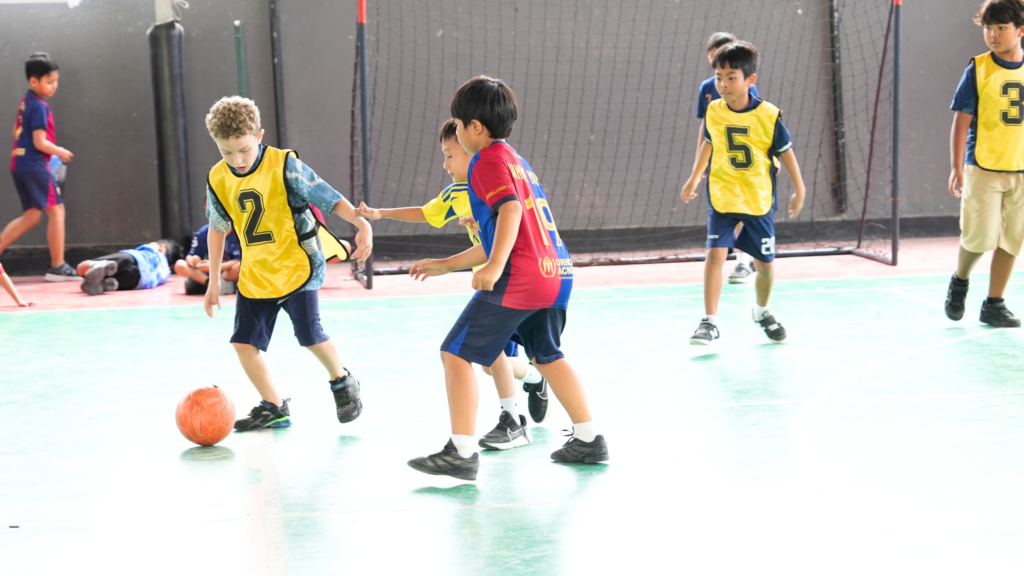
The physical benefits of sports are a cornerstone for children’s growth, laying the foundation for lifelong health. Regular participation in activities like soccer, swimming, tennis or badminton helps combat childhood obesity, strengthens bones and muscles, and improves cardiovascular fitness.

For global parents, this means your child gains the energy and endurance to explore the world, from Bali’s beaches to urban adventures.

In early years, sports enhance motor skills, coordination, and balance which reduces injury risks later. Unlike sedentary play, sports encourage active lifestyles, helping kids meet the recommended 60 minutes of daily exercise.

Fostering Resilience and Confidence

The mental benefits of sports are profound, helping children navigate emotions and build inner strength. Through wins and losses, kids learn resilience, managing frustration and bouncing back stronger which is an essential way  for facing global challenges like cultural adjustments or academic pressures.

Sports release endorphins, reducing anxiety and depression while improving mood and self esteem.

For children, this emotional growth translates to better focus and reduced behavioral issues.

Global parents often note how team sports teach empathy, as kids support teammates from diverse backgrounds. As an International School in Bali, our activities like group relays emphasize emotional intelligence.

Academic Benefits of Sports for Children: Enhancing Focus and Performance in School

Surprisingly, the benefits of sports extend to academics, where active children often show improved concentration and higher grades.

Physical activity boosts brain function, enhancing memory, attention, and problem solving essential for learning. Studies show sports participants have better attendance and discipline, leading to stronger educational outcomes.

For global children, sports teach time management, balancing practice with studies. In multicultural settings, they promote cognitive flexibility.

Cultivating Teamwork and Friendships Worldwide

The social benefits of sports are invaluable, teaching children to collaborate, communicate, and build friendships across cultures.

Team activities create a great support of leadership and respect, helping kids to navigate group dynamics in a global world. For shy children, sports provide a safe space to connect, reducing isolation.

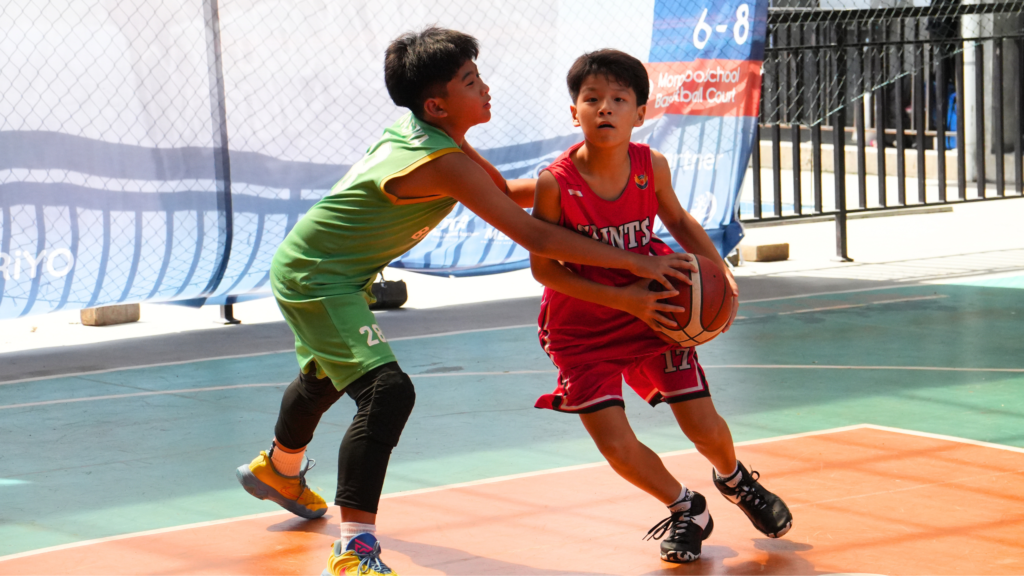
Globally, sports like basketball or football break barriers, promoting inclusivity. In Bali’s diverse community, they encourage cultural exchange.

At Santosa Intercultural School, our sports teams mix backgrounds, embodying “grow as a group”, which includes students of different nations and build the empathy among them .

Measuring the Impact: Signs Your Child is Thriving Through Sports

Look for increased energy, better mood, and stronger friendships as signs of sports’ benefits. Improved focus and resilience indicate mental growth.

The benefits of sports for children are undeniable, building bodies, minds, and hearts for a global future. As global parents, introduce sports early for lasting joy.

Discover how our School in Bali brings these benefits into our school campus. Visit doremischools.sch.id and grow as a group, flourish as individuals.

Professional Source from:

https://pce.sandiego.edu/child-development-through-sports

Neurodiversity in Early Education

How Neurodiversity in Early Education Boosts Confidence and Provides Support

As modern parents, you’re navigating a world where every child deserves to shine in their own unique way. Neurodiversity in early education is a transformative approach that appreciates diverse minds, turning potential challenges into mind leverages and strength.

Imagine your little one thriving in a classroom where differences are strengths, with sparks of creativity, empathy, and self confidence.

In Doremi Preschool, we embrace this philosophy, blending our IEYC and Cambridge Curriculum with inclusive practices to nurture every child’s potential.

Drawing from expert insights on why embracing neurodiversity matters, this guide shows how neurodiversity in early education can bring joy and achievement to your family.

The clear message? By supporting neurodiverse learning earlier, you’re giving your child the gift of self acceptance and boundless growth. Let’s dive in and discover how this can light up your child’s world.

What Is Neurodiversity in Early Education?

Neurodiversity in early education views neurological differences like autism, ADHD, dyslexia, or giftedness as natural variations in the human brain, not deficits to fix.

It’s about recognizing that “normal” is a spectrum, and every child brings valuable perspectives to the table. In early years (ages 0-8), this means shifting from one size fits all teaching to inclusive methods that honor unique thinking styles.

For global parents, this approach is especially powerful in diverse environments like Bali, where cultural mixes mirror brain diversity.

Traditional education might overlook these variations, leading to frustration, but neurodiversity focused methods celebrate them, fostering joy through acceptance.

As an International School in Bali, our IEYC and Cambridge programs integrate this by adapting activities to individual needs, showing how neurodiversity enriches group learning.

Embracing this early builds a foundation where your child feels valued, reducing anxiety and boosting engagement key to sparking genuine success.

How Neurodiversity in Early Education Boosts Emotional Well Being

One of the greatest gifts of neurodiversity in early education is the joy it brings through inclusion. When children see that they are being understood, they experience less stress and more happiness in learning.

Neurodiverse kids often have strengths like hyperfocus or vivid imagination, which, when supported, lead to moments of pure delight like a child with ADHD leading a creative project with boundless energy.

Globally, this reduces stigma, helping all children develop empathy. In Bali’s multicultural vibe, it means blending neurodiversity with cultural diversity for richer interactions.

At our school we use flexible grouping in our Curriculum, where neurodiverse traits shine in collaborative tasks, creating impressive classrooms.

Building Empathy and Social Skills Through Neurodiversity

Neurodiversity in early education teaches empathy by exposing children to different ways of experiencing the world. When kids learn alongside neurodiverse peers, they develop patience, communication, and understanding skills that are vital for global citizenship.

This inclusive environment reduces isolation, developing social bonds that lead to gratitude and empathy. In Bali’s community oriented culture, it means enfold differences through shared activities.

As an International School in Bali, our IEYC and Cambridge Curriculum includes role play that highlights neurodiverse perspectives, building empathetic leaders.

Measuring Happiness and Self Confidence

Success in neurodiversity in early education will be shown as an increment of engagement, friendships, and self advocacy. Happiness appears in eager participation and creative expression.

At Doremi Preschool and Santosa Intercultural School, an International School in Bali, we track through detailed observations by our mindful teachers and staff.

We believe that with caring support we can create a better world for every child, despite their own differences.

Neurodiversity in early education boosts confidence and provides support by encouraging unique minds. As modern parents, embrace this for your child’s inclusive future.

Professional Source from:

https://www.cela.org.au/publications/amplify!-blog/dec-2024/embracing-neurodiversity-important


Read more – Doremi Foundation – International School in Bali

Creative Arts for Kids

Creative Arts for Kids: Stimulate Imagination and Growth in Bali’s Early Education

As parents, you want to give your child every opportunity to bloom into a confident, creative individual ready for a world full of possibilities.

Creative arts for kids aren’t just fun, they’re a cornerstone of early education that sparks imagination, fosters emotional growth, and builds essential skills for life.

In Bali’s vibrant cultural landscape, where art is woven into daily life, incorporating creative arts into your child’s routine can be a great move.

As an International School in Bali, we see firsthand how arts integrated learning inspires young minds, blending Balinese traditions with global perspectives.

Drawing from expert guidance on the role of creative arts in early childhood, this guide shares practical ways to nurture your child’s creativity at home and through school. Start simple, embrace the process, and watch your child’s imagination soar.

Why Creative Arts for Kids Matter in Early Education

Creative arts for kids go beyond crayons and paper; they encompass activities like music, drama, visual arts, and movement that engage the whole child.

In early education, these experiences nurture imagination by allowing children to explore ideas freely, without the pressure of “right” answers.

For preschool age children, arts build cognitive skills like problem solving and spatial reasoning, which support emotional development through expressing feelings and empathy.

In Bali, where artistic traditions like batik and dance are alive, creative arts for kids offer a unique cultural lens, helping children connect with their environment and heritage.

This holistic approach aligns with early childhood principles, promoting joy and making as key to growth.

At Doremi Preschool, our IEYC curriculum integrates arts to inspire imagination, showing parents how these activities lead to confident, empathetic learners.

The Power of Process Art: Letting Kids Lead Their Creative Journey

Process art is an artistic approach where the act of creation, exploration, and experimentation with materials is prioritized over the final product.

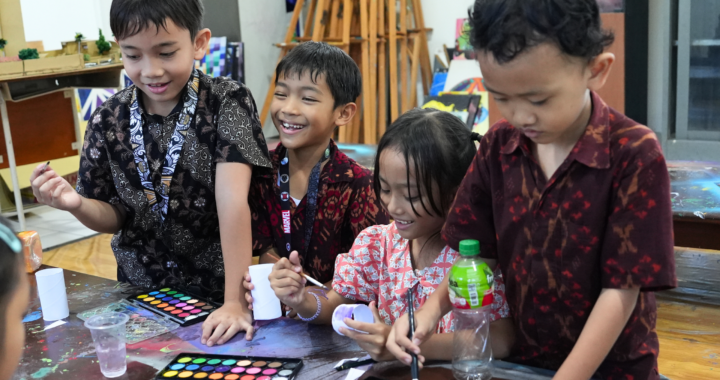
It is a game changer in creative arts for kids, focusing on the process rather than a result. Give your child materials like paint, clay, or recycled items, and let them experiment without instructions, this sparks imagination and builds independence.

In Bali’s tropical setting, incorporate natural elements like leaves or sand for sensory play, turning art into an adventure. This approach nurtures emotional growth by allowing kids to express feelings freely, reducing frustration and boosting self esteem.

As an International School in Bali, process art is central to our early education, where children create without goals, fostering the joy of discovery.

You can also implement this at home by setting up a “messy zone” and see for yourself the excitement it can bring to your little ones.

Integrating Music and Movement: Boosting Brain and Body Development

Music and movement are vital in creative arts for kids, enhancing physical coordination and cognitive skills through rhythm and dance.

Singing songs, rhythmic claps, or creating simple instruments from household items can inspire imagination while building social bonds.

In Bali, draw from local gamelan music for cultural depth, helping children appreciate diverse sounds and traditions.

This integration supports holistic growth, improving language and emotional regulation, music sessions blend Balinese rhythms with global tunes, showing how arts nurture the whole child.

Visual Arts Exploration: From Scribbles to Masterpieces

Visual arts like drawing, painting, and sculpting are foundational in creative arts for kids, encouraging fine motor skills and self expression. And Bali is one of the best places where you can learn those artistic elements as it goes on with our everyday life.

Start with an open ended task, for example you can start with “Draw your dream adventure” or “Sketch your family with you in it”, this stimulates them to inspire imagination without limits.

Bali’s artistic heritage, with its vibrant colors and patterns, provides endless inspiration, using local motifs to connect art with culture.

This fosters cognitive development, as kids learn to observe and interpret the world. At both Doremi Preschool and Santosa Intercultural School, we combine our IEYC and Cambridge Curriculum with visual arts as a part of daily learning, where scribbles evolve into stories, promoting emotional growth.

Stage Play and Storytelling: Unleashing Emotional Intelligence

Stage play, through role playing and prop making, is another powerhouse in creative arts for kids, inspiring imagination and empathy.

By utilizing simple props like scarves or boxes to create simple costumes and build up the world of imagination, is another great way to build social skills as well as their emotional quotient as children collaborate and express their imagination. In Bali, incorporate traditional puppetry for cultural storytelling, helping kids understand diverse narratives.

This supports emotional growth by allowing expression of feelings in safe ways. Dramatic activities integrate with literacy, turning play into learning.

As an International School in Bali, we constantly engage our beloved students of Doremi Preschool and Santosa Intercultural School with hands on activities and create an environment that stimulates and supports their imagination.

Professional Source from:

https://www.naeyc.org/resources/topics/creative-arts


Read more – Doremi Foundation – International School in Bali