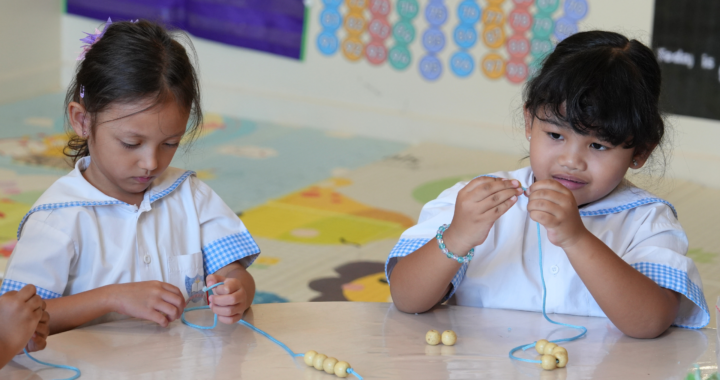
Do you know what Spaced Repetition is? And how does it impact our students’ long term memory? At Doremi Preschool, located in the heart of Denpasar, Bali, we are dedicated to empowering our little oneswith effective, research backed learning strategies. Through our IEYC curriculum in our Preschool, that enhanced with the diverse culture in Bali, we make Spaced Repetition as one of our methods to strengthen their core memory so children can get deeper understanding and build a smarter, scientific way to extend the gaps to long term retention and achieve lasting mastery.
Spaced Repetition: A Smarter Way to Strengthen Memory
Spaced repetition is a scientifically proven learning technique that helps children retain knowledge by reviewing it at gradually increasing intervals. Unlike rote learning, where students repeat information without engagement, the Spaced Repetition method strengthens connections in the brain and makes recall easier over time, benefiting our students of Doremi Preschool Bali in enhancing visual retention..
The principle behind spaced repetition in Doremi Preschool as one of the international schools in Bali is simple: instead of reviewing material all at once, the students of Doremi Preschool revisit it at strategic points. Initially, they review information at shorter intervals in their daily activities through our IEYC theme and Character Quality, and as they master it, the review sessions move to longer intervals. That information will be repeated over and over, as preschool and kindergarten students need to have repetition in order to totally understand the learning process. This effective method has been widely studied in educational psychology and is known to enhance long term retention.
Thanks to our cooperative parents, they use spaced repetition software to help their children reinforce learning. These tools automatically determine the best timing for revision, adjusting intervals based on difficulty so that they can practice it at home. Popular examples include digital flashcards that adapt based on correct and incorrect responses.
Why This Technique Fits Perfectly at Doremi Preschool
As one of the best international schools in Bali, students at Doremi Preschool juggle a rich array of subjects, including languages, mathematics, sciences and cultural studies. Using spaced repetition in daily study routines helps our students retain information better, whether it’s vocabulary in Bahasa Indonesia, English, or Mandarin, math formulas, or historical facts in our bilingual curriculum. By applying this method, children not only spend less time relearning but also build a solid foundation for future education in Doremi Preschool and Santosa Intercultural School.
Benefits for Doremi Preschool Students and Parents
- Deeper, Long-Term Retention: Strengthens memory for upcoming Cambridge assessments in Santosa Intercultural School as International School in Bali, and real world application.
- Time Efficiency: Less relearning means more time for creative projects, sports, and me-time for both parents and students.
- Boosted Confidence: Easier recall leads to stronger performance, dependence and reduced stress.
- Lifelong Learning Skills: Prepares the students of Doremi Preschool and Santosa Intercultural School students for the higher education level such as university and beyond.
How to Implement Spaced Repetition at Home
As an international school in Bali, Doremi Preschool parents play a vital role in reinforcing this powerful technique outside the classroom. Here’s a detailed, step-by-step guide as a to get started and make it a sustainable family habit:
- Start with Flashcards, continue with Digital Apps for bigger kids: Both Doremi Preschool and Santosa Intercultural School use a lot of flashcards for key concepts, vocabulary, formulas, or facts. Physical cards are great for younger children as they’re tactile, create longer intervals during learning, and fun to handle. For older students, parents may mix the physical Flashcards with apps like Anki, Quizlet, or Duolingo (for languages), which use built-in spaced repetition algorithms. These apps track performance and automatically schedule reviews to show difficult cards more often and easy ones less frequently.
- Master Active Recall: Encourage your child to actively test themselves rather than passively rereading notes. On one side of the flashcard, write a question or prompt; on the other, the answer. Have them attempt to recall the answer before flipping the card. This strengthens memory far more than highlighting or rewriting. The benefits of the multicultural environment in our schools in Bali creates a great way to have group activities and discussions among the students to reinforce their knowledge through communication with the peers. On the other hand, the younger learners of Doremi Preschool can have fun storytelling and sing-a-long activities to make it easier for them to process the information.
- Follow the Leitner System for Manual Spacing: If using physical cards, try the classic Leitner system: Divide cards into boxes or piles (e.g., Box 1: daily review, Box 2: Every 3 days, Box 3: Weekly, etc). Correct answers move to the next box (longer interval); wrong ones stay or go back. This mimics app algorithms without screens that are suitable for modern parents in the Bali environment.
- Create a Simple Schedule and Track Progress: Doremi Preschool and Santosa Intercultural School as one of the international schools in Bali creates a conducive environment where repetition will not feel like a chore. Set up a calendar or chart showing review days and do it through gamification to make it exciting. Use multisensory techniques and discuss the topics during dinnertime or create some wall posters together, just like what we did in Doremi Preschool. Celebrate milestones with small rewards as simple as a day trip to Bali Zoo or Sanur Beach to keep motivation high.
- Make It Fun and Culturally Relevant In Doremi Preschool, as one of the international kindergartens in Bali, we often creates the reviews into games: Play “flashcard bingo,” time challenges, Quizzes, or pair it with Balinese elements through our multicultural events in Bali or our monthly IEYC themes. Involve siblings in quizzing each other, or create themed decks inspired by Bali’s arts, dances, or nature. This keeps sessions engaging and ties learning to their day-to-day routine.
- Keep Sessions Short and Consistent Aim for 10-20 minutes daily rather than hour long cram sessions. In Doremi Preschool, we believe that consistency beats intensity, thus the implementation of Repetitive Learning even in brief reviews on busy days maintains the spacing effect. Start small with one theme, then expand.
Our teachers at Doremi Preschool and Santosa Intercultural School already incorporate Spaced Repetition method into our classroom activities, supporting learners from early years through secondary with the multicultural environment of Bali. By continuing this at home, you’ll see noticeable improvements in retention and confidence.
Building Stronger Memories Together
By embracing Spaced Repetition, we equip Doremi Preschool and Santosa Intercultural School students with smarter habits for joyful, effective learning in our supportive community as the international school in Bali.
Interested in experiencing this approach? Contact us for a campus visit in Denpasar or enrollment details.
Source: https://magrid.education/repetitive-learning-technique/