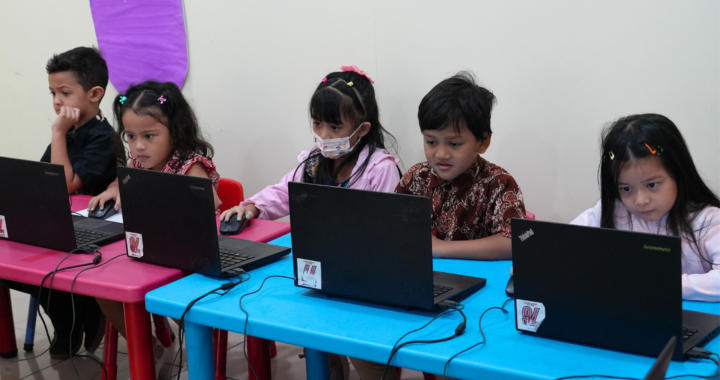
In today’s fast-paced world where digital devices are as commonplace as storybooks, parenting around media has become one of the most pressing challenges for families.
At Doremi Preschool, an esteemed International School in the vibrant heart of Denpasar, Bali, we understand that this is one of the serious matters that our parents face these days.
As educators committed to the International Early Years Curriculum (IEYC), we prioritize holistic development, including character study that fosters emotional resilience, creativity, and mindful decision making.
Technology evolves at breakneck speed, and many parents today didn’t grow up with the social media platforms and video streaming services that dominate our children’s landscapes.
This generational gap can make it feel daunting to guide young learners in using digital media responsibly, much like teaching them to balance on a bicycle or navigate the roads as confident drivers.
It’s essential to recognize that while we rigorously test everyday essentials like food and toys for safety, the digital realm lags behind.
There are no comprehensive safety regulations governing the design of apps and platforms, meaning children often engage with content crafted primarily for adults, overlooking the crucial developmental stages of early childhood.
At Doremi Preschool, our IEYC framework addresses this by integrating character study modules that encourage children to reflect on the media’s impact on their emotions and behaviors, enhancing a balanced approach from the earliest ages.
Moving Beyond the Traditional 2-Hour Screen Time Rule: A Holistic Perspective
For years, experts recommended limiting screen time to no more than two hours per day for children, a guideline rooted in concerns about physical health and sedentary lifestyles.
While this rule served as a starting point, it falls short in our increasingly connected world. It doesn’t account for the nuanced ways media influences emotional wellbeing, social skills, or cognitive growth, the areas central of the IEYC curriculum at Doremi Preschool based in Renon, Denpasar.
Here, we go deeper, using character study to help children discern how screens can either nurture or hinder their innate curiosity and empathy.
The American Academy of Pediatrics (AAP) Center of Excellence on Social Media and Youth Mental Health has pioneered a more comprehensive strategy: the 5 C’s of media guidance.
This approach is research based, drawing from studies on family dynamics, social-emotional development, and mental health.
Tailored for different age groups from infants to older teens, it provides actionable, age appropriate tips that align seamlessly with the play-based, inquiry-led learning at our school.
At Doremi Preschool as one of the International School in Bali, we adapt these principles into daily routines, ensuring that screen time, when used, supports rather than supplants hands-on exploration and character building activities.
Whether you’re a parent in bustling Denpasar or navigating family life elsewhere, the 5 C’s empower you to foster healthy screen time habits.
For infants, the focus is on minimal exposure to build foundational trust. For toddlers and preschoolers, it’s about encouraging them to boost language and social skills; school-age children benefit from guided discussions on content choices.
Young teens learn self regulation amid peer influences, and older teens develop critical evaluation skills for online authenticity.
By embedding these into your home environment, much like we do at Doremi Preschool through IEYC monthly character study and thematic sessions, you create a supportive scaffold for lifelong digital literacy.
Unpacking the 5 C’s: A Framework for Balanced Screen Time Engagement
The 5 C’s: Child, Content, Calm, Crowding Out, and Communication, offer a child-centered lens for media use. Developed with input from developmental psychologists and educators, this model transcends rigid limits, emphasizing quality interactions over quantity.
At Doremi Preschool Denpasar, we weave these elements into our curriculum, using character study to help young learners articulate their feelings about the digital world, turning abstract concepts into tangible, age appropriate reflections. Let’s explore each C in depth, with practical examples drawn from early years education and family life.
1. Child: Tailoring Guidance to Your Unique Learner
Every child is a one-of-a-kind masterpiece, with personalities that shape their media interactions in profound ways. The first C invites parents to pause and reflect: Who is your child at their core? Are they a bold explorer drawn to high energy adventure videos, or a sensitive dreamer who finds solace in gentle storytelling sessions? Understanding these traits is key to mitigating risks and amplifying benefits.
Consider a preschooler at Doremi Preschool located in the heart of Denpasar, enrolled in our IEYC program.
During daily morning circles, we observe how one child might thrive on interactive educational games that build problem solving skills, while another becomes overwhelmed by fast paced animations, leading to heightened anxiety.
By assessing individual temperaments, parents and educators can curate media usage that align with developmental needs.
For instance, if social media stirs feelings of exclusion in a more introverted child, redirecting to collaborative online art projects can help their social emotional growth.
Research underscores this personalization: children with artistic inclinations may use digital media to hone talents, like composing simple melodies via kids friendly apps, increasing confidence and creativity.
Conversely, those prone to anxiety might need buffers, such as parental co-engagement, to prevent media from exacerbating worries.
At our Doremi Preschool, we conduct initial assessments during enrollment, blending IEYC inquiry cycles with character study to map each child’s media profile. This ensures that screens serve as tools for empowerment, not unintended stressors.
You may start with simple questions: What lights up your child’s eyes during screen time? Does it make you happy or a subtle unease? These insights pave the way for tailored strategies that honor your child’s individuality.
Expanding on this, consider the cultural context of Denpasar, where Balinese traditions emphasize harmony and community.
At Doremi Preschool, we integrate local folklore into digital storytelling sessions, allowing children to see themselves reflected in media.
This not only boosts self esteem but also teaches cultural pride through character study, where kids discuss the Balinese legends versus modern cartoon icons.
By viewing your child through this multifaceted lens, media becomes a bridge to deeper self awareness, aligning with the IEYC’s goal of globally minded, empathetic learners.
2. Content: Curating Quality Over Quantity
Content is the heartbeat of digital platform experiences, profoundly influencing a child’s worldview, behaviors, and emotional landscape.
High quality media can ignite imagination and teach valuable lessons, while poor choices that are riddled with violence, stereotypes, or consumerism might bring confusion or negativity.
The second C urges families to become discerning curators, actively evaluating what crosses the screen.
At Doremi Preschool Denpasar, our IEYC curriculum rigorously vets digital resources, prioritizing those that promote positive character traits like generosity and honesty.
During character study sessions, children explore narratives that model healthy relationships, contrasting them with “red flag” content like videos glorifying aggression or unattainable beauty ideals.
Parents can mirror this by previewing apps and shows: Does the content encourage collaboration, or does it isolate? The utilizations of tools like Common Sense Media provide unbiased reviews, rating everything from educational platforms to popular games.
Take violence on a digital platform, a common pitfall. Studies link repeated exposure to aggressive behaviors in young children, yet it’s often masked in “trendy” challenges on social platforms.
At Doremi Preschool as one of the International School in Bali, we replace such fare with IEYC aligned videos on cooperative play, where characters resolve conflicts through dialogue, mirroring real life character study scenarios.
Similarly, commercialism preys on impressionable minds, turning fun into subtle sales pitches. By discussing these elements openly, children learn to spot manipulation, building critical thinking from an early age.
Unrealistic beauty standards pose another challenge, particularly for preschoolers forming self concepts. In Denpasar’s diverse community, Doremi Preschool Denpasar counters this through character study focused on inner strengths and self love that is able to be built with activities like drawing self portraits inspired by inclusive stories.
Educational content, such as interactive science apps or language building songs, emerges as a gold standard. These not only entertain but educate, aligning with IEYC’s emphasis on transdisciplinary learning.
Parents can build a content audit as a family ritual: rate shows on a simple scale of “empowering” to “concerning,” and seek alternatives that could be thoughtful and grow. Over time, this cultivates a media diet as nourishing as a balanced meal.
3. Calm: Digital Platform as a Tool, Not a Crutch for Emotional Regulation
In moments of big feelings, it may cause frustration, overstimulation, or bedtime jitters, and social media often becomes the default soother.
Yet, relying solely on screens for calm can lead to a short circuit a child’s ability to develop intrinsic coping mechanisms. The third C emphasizes alternative strategies, ensuring media supports rather than supplants emotional toolkit building.
Doremi Preschool in Denpasar champions this through our IEYC’s sensory integration activities, where character study helps children name emotions and experiment with non digital calms like deep breathing or nature-based activities.
For toddlers, a screen might temporarily distract from a tantrum, but we guide parents toward “media free zones” during highly emotional times, introducing mindfulness games instead.
Research from the American Academy of Pediatrics (AAP) highlights how excessive screen soothing disrupts sleep cycles and self regulation, particularly in early years when neural pathways for emotional control are forming.
Imagine a preschooler winding down for resting time: instead of a tablet, our Doremi Preschool uses soft music and guided visualizations, fostering deeper connection alongside self control.
For families at home, you can start small by replacing evening scrolls with family hugs or story sharing sessions. If media is needed, opt for serene content like ambient nature videos, paired with discussion: “How does this make your body feel?” Consulting pediatricians or therapists, as needed, can uncover tailored techniques, from yoga for tots to journaling for tweens.
This C is essential for mental health, as unaddressed emotional reliance on screens can amplify anxiety in a post pandemic era.
At Doremi Preschool as an International School in Bali, we track progress through student portfolios, noting how children increasingly self soothe via play based activities with the enhancement of the character study.
By diversifying calm strategies, you empower your child to navigate life’s ups and downs with resilience, turning potential vulnerabilities into strengths.
4. Crowding Out: Protecting Space for Real Life Joys
Screens have an uncanny ability to expand, encroaching on precious time for sleep, play, and connection. The fourth C shifts focus from mere reduction to intentional prioritization: What vital activities is media displacing, and how can we reclaim them?
In the IEYC framework at Doremi Preschool Denpasar, we audit daily schedules to ensure screens enhance, not eclipse, outdoor adventures or family meals as a core to character study on gratitude and presence.
Platforms’ “hooks”, endless scrolls, and notifications, can exploit attention spans, a design flaw kids can’t yet counter. Families benefit from a media plan: designated times and zones, like “screen free dinners” to safeguard bonding.
Consider the ripple effects: skimping on sleep due to late night gaming impairs focus, a concern we address in school through character building sleep stories.
Outdoor time, whereas vital for physical health, gets crowded out by indoor binging; at both Doremi Preschool and Santosa Intercultural School, we counter with outdoor excursions around Bali, blending nature with reflective character journals. Pets, hobbies, or many varieties of outings offer joyful alternatives, each reinforcing social emotional bonds.
Crafting a family media manifesto can co-created input from all ages by ensuring buy in. At Doremi Preschool, children contribute ideas during circle time, learning agency through IEYC projects.
This C isn’t about deprivation but abundance: by carving out space for unplugged pursuits, media regains its role as a supplement, enriching lives without overwhelming them.
5. Communication: Building Bridges Through Open Dialogue
The cornerstone of the 5 C’s is communication. Frequent, non judgmental talks that demystify screen time and fortify family ties.
Early and ongoing conversations cultivate digital literacy, helping children articulate struggles before they escalate.
At Doremi Preschool and Santosa Intercultural School Denpasar, IEYC dialogue circles model this, where character study prompts like “What surprised you in that story?” extend to media reflections.
Parents can emulate by asking open ended questions: “What was fun about that game? Did it make you feel strong?” This reduces parental guilt, framing discussions as collaborative problem solving.
In Denpasar’s close knit communities, we emphasize cultural nuances in talks, ensuring children navigate global media with local values.
Research shows such communication buffers against cyberbullying or FOMO, empowering teens to seek help proactively. Start young: for preschoolers, use puppets to role play scenarios, as for older kids, debrief viral trends. Consistency breeds trust, turning media from a minefield into a shared adventure.
Embracing the 5 C’s at Doremi Preschool: A Call to Mindful Media
Inspired by the American Academy of Pediatrics (AAP)’s innovative framework, which builds on earlier models like the 3 C’s from education pioneer Lisa Guernsey, the 5 C’s resonate deeply with our mission at Doremi Preschool.
We adapt it locally, infusing Balinese serenity into character study for Doremi Preschool’s young global citizens.
As you implement these principles, remember: this isn’t about perfection but progress. Consult your pediatrician for personalized advice, and visit resources like www.HealthyChildren.org for deeper dives.
At Doremi Preschool, we are here to partner with you, blending IEYC excellence with the 5 C’s to nurture well rounded, media savvy children.
Professional Source from:
https://www.healthychildren.org/English/family-life/Media/Pages/kids-and-screen-time-how-to-use-the-5-cs-of-media-guidance.aspx